
With rising energy costs affecting everyone, the demand for scrubbers and filters to remove particles from exhaust gases is increasing. This makes it necessary to consider alternatives. In these situations, condensing boilers are becoming the solution. They are intelligent, clean, and achieve efficiencies up to 96%. Boiler Philippines is one of the top condensing boiler manufacturers, offering various brands to meet different needs.
This article serves as a crash course on condensing steam boilers, covering their operation, efficiency, advantages, and disadvantages. It also recommends top boilers on the market to assist in your search. Let’s begin!
How Condensing Steam Boilers Work
A condensing steam boiler is an energy-efficient steam generator that operates as follows:
- Burner: Fuel is ignited by an igniter, creating a combustion reaction in the combustion chamber that releases heat.
- Flue gas flows through the flue: The flue gas passes through the flue, transferring the generated heat to the water in the boiler, heating the water and producing steam.
- Steam separation: The steam inside the boiler mixes with water and needs to be separated using a steam separator to prevent water droplets from entering the steam pipes.
- Steam pipe delivery: The separated steam is delivered through steam pipes for heating or driving equipment.
- Flue gas condensation: The flue gas contains a large amount of water vapor. The gas passes through a condenser to cool it, causing the water vapor to condense into water, which is then drained, improving thermal energy utilization.
- Gas emission: After cooling in the condenser, most of the water has condensed, and the flue gas is emitted into the atmosphere.
Through this process, high-efficiency condensing boilers achieve efficient energy conversion and utilization, reducing energy consumption.
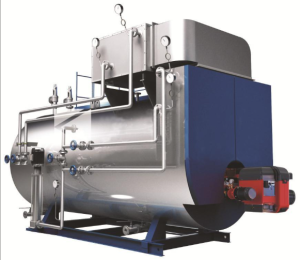
Types of Condensing Boilers
Condensing boilers are mainly divided into three categories:
1. Combi Boilers
These are among the highest category (Grade A) boilers on the market in terms of efficiency. They save space and significantly reduce heating costs.
2. System Boilers
Combi boilers and system boilers are similar in consuming water from the mains. The difference is that system boilers store hot water in a cylinder rather than delivering it on demand. System boilers can better meet facility hot water needs.
3. Conventional Boilers
Conventional boilers consist of a cylinder and a storage tank. They are also known as regular boilers or open-vent boilers. While they can provide large amounts of hot water, there are better options if space is limited. They can be used with solar heating systems, similar to system boilers, helping to reduce energy costs.
Condensing vs. Non-Condensing Boilers
Boilers with condensing technology are much more efficient than non-condensing boilers. Newer models can achieve efficiencies above 90%, while boilers without condensing technology operate at only 70-80% efficiency.
The condensing system is more efficient because it uses a “flue gas recovery system” to utilize waste heat from the flue to preheat cold water entering the boiler. Additionally, it uses less fuel and produces less CO₂, making it more environmentally friendly.
Are Condensing and Combi Boilers the Same?
A common question is whether condensing boilers and combi boilers are the same. While these names are sometimes used interchangeably, they are actually different. Condensing technology refers to the method the boiler uses to improve efficiency. In contrast, combi boilers don’t require a storage tank. All new combi boiler installations require condensing technology boilers, but a condensing boiler isn’t always a combi boiler—it can be a system boiler or conventional boiler.
Why Condensing Boilers Are Better
Condensing boilers are superior to non-condensing boilers primarily because of their higher energy efficiency. Before condensing technology, boilers could lose up to 30% of their heat when directly vented through the flue. However, condensing boilers use a flue gas heat recovery system to reclaim waste heat from the flue to preheat incoming cold water. This allows them to operate at higher efficiencies.
Additionally, they have the highest heating output potential. Compared to standard gas or electric boilers with the lowest heat values, condensing boilers can provide an additional 10-15% efficiency through condensation. Therefore, condensing boilers can achieve efficiencies of 90-96%, far exceeding the 78% efficiency of non-condensing systems.
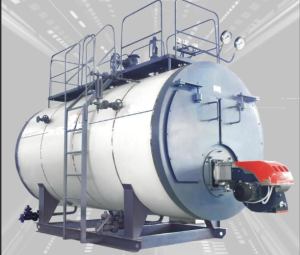
How Long Do Condensing Boilers Last?
The lifespan of condensing technology depends on the quality of construction, type, and usage. However, proper maintenance can extend its life. A gas-safe registered heating professional should service your boiler annually. Always verify the boiler’s warranty to ensure you’re selecting a high-quality product. Boiler Philippines offers warranties of up to five years, along with after-sales support to make the installation process worry-free and help you save money.
Advantages and Disadvantages of Condensing Boilers
Condensing boilers offer numerous advantages, but they also have some drawbacks. Let’s analyze their pros and cons to help you decide if they’re right for you.
Advantages of Condensing Boilers
- Latent Heat Recovery: The most significant benefit of condensing technology is latent heat recovery, which improves thermal efficiency. The heat exchanger recovers latent heat from moisture during condensation, resulting in efficiency greater than 100% compared to the fuel’s lower heating value.
- Reduced Emissions: Flue gas condensers also reduce emissions, making condensing boilers more environmentally friendly. The condensed water forms a film that captures pollutants. In short, condensing systems emit significantly less CO₂ than non-condensing boilers. Installing a new unit could reduce annual carbon emissions by up to 1,200 kg!
- Lower Energy Costs: Condensing technology boilers use heat that would otherwise be wasted to preheat cold water entering the system. This maximizes efficiency, resulting in lower fuel costs due to reduced fuel consumption.
Disadvantages of Condensing Boilers
- Higher Maintenance Costs: Condensing technology boilers are more complex and require gas-safe certified experts, affecting maintenance costs. Non-condensing boilers have lower repair costs in the short term, but condensing boilers are more efficient in the long run.
- More Complex: External pipes in condensing boilers risk freezing in cold weather, which can cause the boiler to stop working. Acid concentration may also lead to corrosion in these boilers. Despite these issues, their superior efficiency makes them valuable.
- Corrosion Risk: When mechanical stress is high, combustion products can cause corrosion, potentially leading to cracks in low-temperature steel heat exchangers. However, using corrosion-resistant materials, careful installation, and sophisticated controls can mitigate this risk.
Condensing Boiler Costs
The cost of condensing technology boilers depends on their capacity, features, efficiency, and performance. As an estimate, a 1-20 ton/hour boiler with 98% thermal efficiency might cost around $10,000. Higher-capacity condensing boilers can cost $75,000 or more.
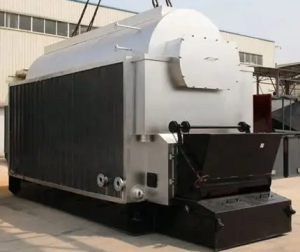
Specifications
- Horizontal, integrated design saves space.
- Larger chamber consumes less energy but heats faster.
- Wavy furnace threaded flue tubes improve heat transfer and save fuel.
- Built-in safety measures, including explosion-proof doors, ensure constant safety.
- LCD screen helps monitor boiler operation.
- Multiple boilers can be connected, with load distribution for each.
- Condensing waste heat recovery device ensures maximum energy utilization.
Conclusion
Recently, demand for condensing boilers has grown significantly, primarily because they use less energy and are more efficient. Most manufacturers prefer them due to their ease of use and environmental safety. Their improved efficiency mainly comes from the flue gas recovery system that reclaims heat.
Condensing technology boilers also offer multiple advantages, such as latent heat recovery and a smaller carbon footprint. However, they have some disadvantages, including corrosion risk and higher maintenance costs.
Finally, the cost of condensing boilers depends on their features, capacity, and efficiency. Always purchase from a reputable manufacturer to ensure you get the most value from your investment.